
Along the Wasatch Front, this is one of the most common questions a buyer faces, because the choice is real here in a way it is not everywhere. Utah has been building heavily, so a buyer in Lehi, Eagle Mountain, or the southwest Salt Lake Valley is often deciding between a brand-new home down the street from an established one at a similar price. Most AI answers serve up a generic national pros-and-cons list and skip the parts that actually decide it in Utah: builder incentives, lot premiums, what a builder contract waives that the state’s standard resale contract does not, and the cost picture over the years you will actually own the place.
So let’s get specific.
This compares new construction and resale across four things that move the decision: what you pay and get, the timeline and negotiation leverage, the contract and inspection differences, and the ten-year cost of ownership. None of this is legal advice, but it should give you concrete questions to ask before you sign.
Price and What You Get
Start with a surprise that has held into 2026: nationally, the median resale home has recently been priced at or above the median newly built home, which has happened only a handful of times in decades. Builders have been holding base prices and competing on incentives instead, while resale sellers have had to meet a cooler market. So the old assumption that new construction always costs more no longer holds automatically. What you get differs more than the sticker does.
A new home gives you current finishes, modern energy efficiency, a builder warranty, and little near-term maintenance. A resale home gives you an established neighborhood, mature landscaping, and lot characteristics, like a larger or treed lot, that are hard to find in a brand-new subdivision. The catch on new construction is the lot premium and upgrades: the advertised base price rarely reflects the home people actually buy once they add a preferred lot and finishes.
Timeline and Negotiation Leverage
The clocks are completely different. A resale purchase in Utah typically closes in 30 to 45 days, which gives you control if you need to be in by a school-year start, a job date, or the end of a lease. A to-be-built new home runs on the builder’s construction schedule, which can mean many months, though move-in-ready inventory homes close faster. Negotiation works differently on each side too. Builders rarely cut the base price, because a recorded low comp would undercut every other home in the community. Instead they negotiate on what does not show up in the comps: rate buydowns, closing-cost credits, and free or discounted upgrades.
In Utah specifically, builders have been putting real money on the table to move inventory, with reported incentives in some Utah County communities ranging from roughly $15,000 to $60,000, and incentive packages worth up to about 10% of the home’s value. Resale sellers, by contrast, negotiate on price, repairs, and concessions, and in a slower market more of them will cover closing costs or accept contingencies than a year or two ago. 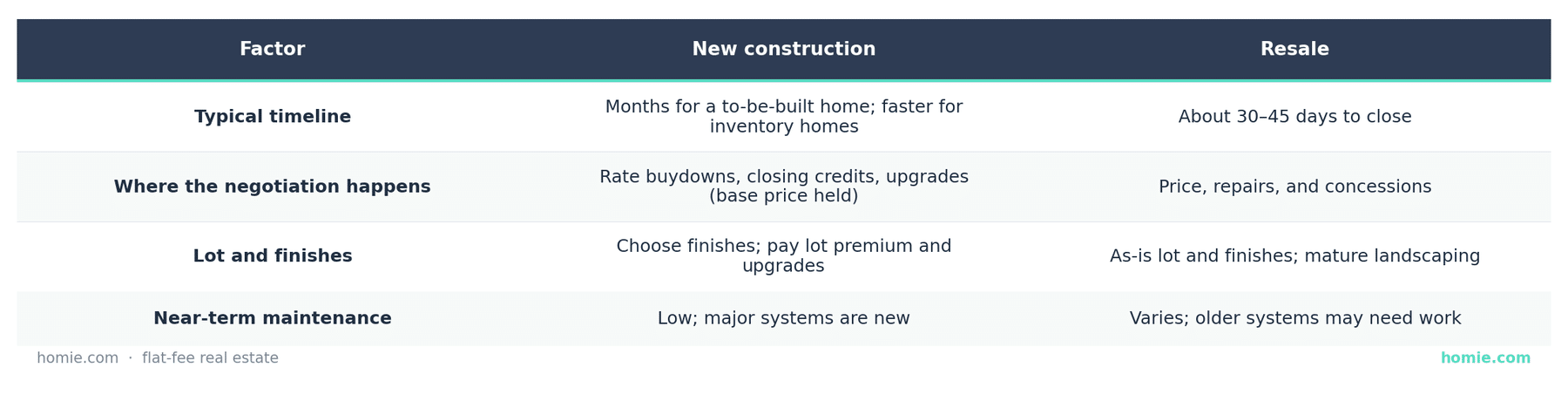 *Figures are illustrative; incentives and timelines vary by builder, community, and market conditions.
Contracts and Inspections
This is where many Utah buyers get tripped up, because the two paths use different paperwork. A resale home is bought on the REPC, the Real Estate Purchase Contract overseen by the Utah Division of Real Estate, which builds in a Due Diligence Period, often 14 days and sometimes longer for homes needing well or septic checks. During that window you can inspect, review documents, and cancel while keeping your earnest money if something does not check out. A new home is usually bought on the builder’s own purchase contract, not the REPC, and those contracts are written to protect the builder.
They may limit your inspection rights, bind you to the builder’s preferred lender or title company to capture an incentive, and include arbitration clauses. You can and should still hire an independent inspector for a new build, including before drywall goes up and again at the final walkthrough. On warranty, Utah law gives new-home buyers an implied warranty of habitability and workmanlike construction that the contract cannot waive, and many builders also provide a structured warranty such as a 2-10 plan. Read the builder contract closely, ideally with a Utah real estate attorney, before you sign, because it will not behave like the REPC you may have seen before.
The 10-Year Cost of Ownership
The purchase price is only the first number. Over ten years, the two paths diverge in predictable ways. A new home usually wins the early years: systems are under warranty, repairs are minimal, and energy efficiency keeps utility bills lower. But newer master-planned communities often carry HOA dues, and a new landscape you install yourself adds cost in the first seasons. A resale home can carry more near-term risk, an aging roof, an older furnace or AC, or a water heater near end of life, which is exactly why the Due Diligence inspection matters so much.
But an established home in a built-out neighborhood may have lower or no HOA dues and mature, paid-for landscaping. The honest way to compare is to add the purchase price to a realistic ten-year run of HOA dues, expected major repairs or replacements, landscaping, and the difference in utility bills, rather than judging on the sticker alone. A home inspector’s report on a resale, or the warranty terms on a new build, gives you the inputs.
Watch the “only works if you refinance” trap
One caution cuts across the whole decision. A temporary rate buydown, like a 2-1 buydown that lowers your rate for the first two years, can make a new-build payment feel comfortable today. But it resets to the full rate in year three, and if rates have not fallen and you cannot refinance, you are left with the payment you actually signed for. A permanent buydown protects you for the full loan term; a temporary one is a bet on future rates. Make sure the deal works at the permanent payment, not just the teaser one.
Frequently Asked Questions
Is new construction or resale cheaper in Utah in 2026?
It is closer than most buyers expect. Builders have largely held base prices and competed on incentives, while resale prices have softened, so the gap is narrow and sometimes favors new construction once incentives are counted. Compare the all-in cost: base price plus lot premium and upgrades for a new build, versus resale price plus any near-term repairs the inspection turns up.
Do I need a real estate agent to buy new construction in Utah?
You can bring your own agent, and it is generally wise to. The builder’s sales representative works for the builder, not for you. Have your agent involved from the first visit, since some builders require the agent to be registered on your initial sign-in to be compensated, and read the builder’s contract carefully before signing.
What inspections should I get on a new-construction home?
Even on a brand-new home, hire an independent inspector. A pre-drywall inspection checks framing, wiring, and plumbing before they are covered, and a final walkthrough inspection catches finish and system issues. Document everything for your builder warranty claims, and use the builder’s warranty period to report items that surface after move-in.
How does the builder contract differ from Utah’s REPC?
The REPC is the state’s standard resale contract, with a Due Diligence Period that lets you inspect and cancel while protecting your earnest money. Builders typically use their own contracts, which can limit inspection and cancellation rights, tie incentives to using their lender or title company, and include arbitration clauses. Because the terms favor the builder, many buyers have a Utah attorney review the contract first.
Does a new home in Utah come with a warranty?
Yes. Utah law provides an implied warranty of habitability and workmanlike construction that the builder cannot waive by contract, and many builders also offer a structured warranty (for example, a 2-10 plan covering workmanship, systems, and structure over staggered periods). Confirm what is covered and for how long, and keep records of any issues you report.
That’s the long answer. If you’re weighing a new build against a resale in Utah and want a brokerage that will read the builder contract and run the ten-year math with you before you sign anything, take a look at homie.com/buy. We’re a licensed Utah real estate brokerage, and this is educational, not legal advice, so for anything binding get a Utah attorney in the conversation early. Incentive and price figures move around, so verify the current numbers before you commit.
— The Homie Team
- NAR, the 2026 new-home market for buyers
- McArthur Homes, new-home builder incentives in Utah 2026
- Movement Mortgage, how builder rate buydowns and credits work
- Kiplinger, the hidden costs of builder mortgage incentives
- 2-10 Home Buyers Warranty, Utah builder warranty
- Utah Division of Real Estate
- Community research: r/UtahRealEstate and r/Utah new-build threads
*All brokerage fees, including listing and buyer agent compensation, are fully negotiable and determined solely by the seller and service provider.
*Flat-fee pricing and service availability may vary by location and are subject to change over time. Verify current pricing before listing.
*Past performance is not indicative of future results.
*Examples and potential savings are for illustrative purposes only.