
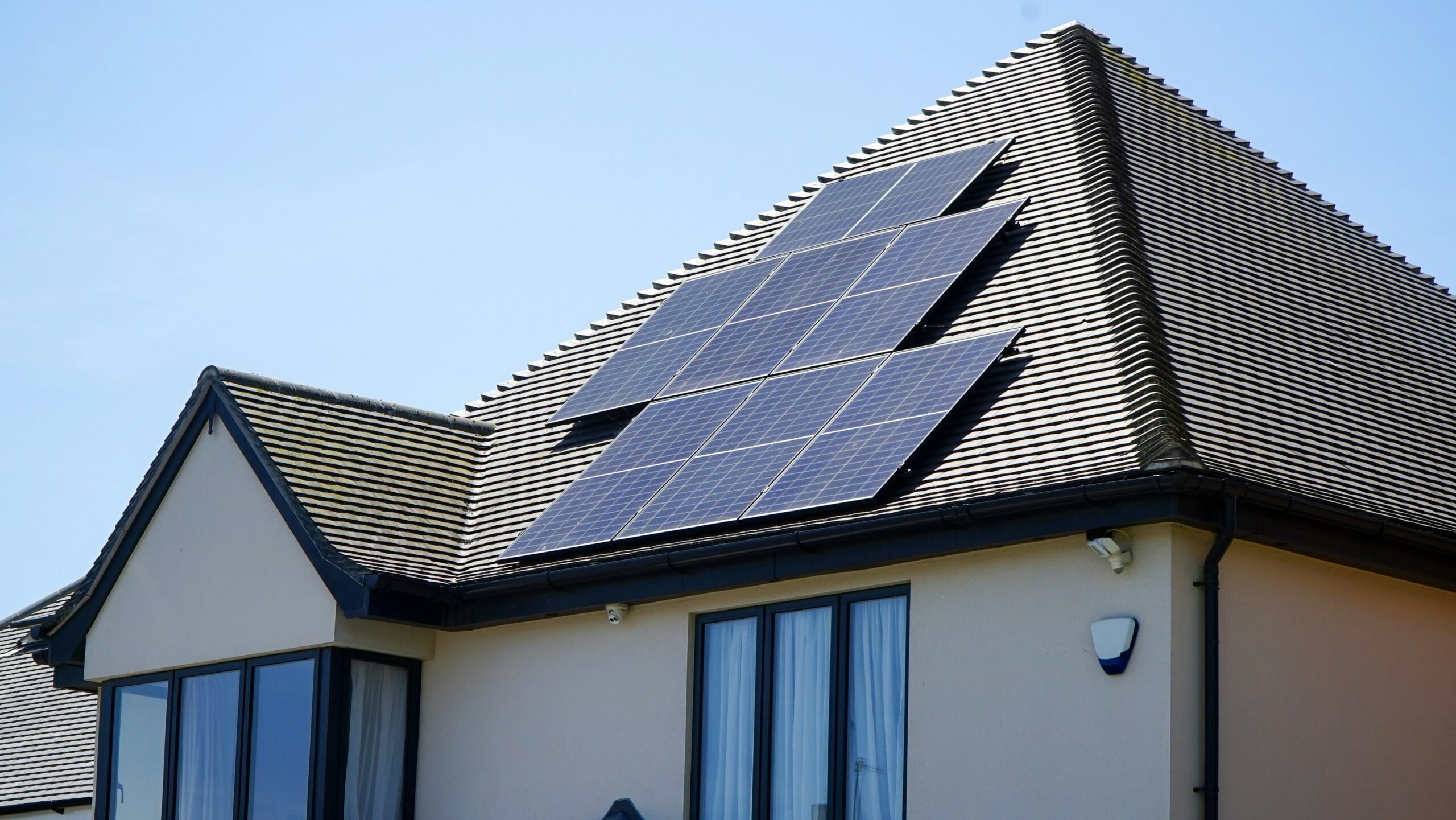
You put solar on the roof six years ago. Now you are listing, and your agent asks a question you cannot immediately answer: do you own the system, or does a finance company?
That one question branches into four different closings. Underneath it sits a second Arizona question almost nobody asks in time: what happens to your utility rate plan when the buyer calls to turn on the power.
Short answer: what transfers depends entirely on how the system is financed. Owned systems convey with the house. Leases and power purchase agreements require the buyer to qualify and assume. Financed systems may carry a UCC-1 fixture filing that has to be cleared or subordinated. And an APS legacy solar rate can be given up permanently at the buyer’s first phone call.
What actually transfers when you sell an Arizona home with solar panels?
Four ownership structures exist, and each lands differently at the closing table.
| Structure | Who owns the panels | What happens at closing |
|---|---|---|
| Owned outright | You | Conveys with the house, no third party involved |
| Financed, loan open | You, subject to a lien | Payoff, release, or subordination of a fixture filing |
| Leased | A solar company | Buyer must qualify and assume, or the lease is bought out |
| Power purchase agreement | A solar company | Same as a lease, but you pay per kilowatt hour with an escalator |
Ranked by how often each derails an Arizona escrow: leases and PPAs first, financed systems with a fixture filing second, financed systems without one third, owned systems last. Ownership drives everything downstream, so if you are in the first two groups, start the paperwork before you list.
What is the APS legacy solar rate, and how can a buyer permanently lose it?
If your system was interconnected to the APS grid before September 1, 2017, you may be on a grandfathered net metering rider that is worth real money and can be given up by accident.
The tariff document is public. Arizona Public Service publishes Rate Rider Legacy EPR-6, which states the rider “is frozen effective September 1, 2017,” that a residential customer “may remain on this rate rider for up to 20 years from the date their solar generator was interconnected to the Company’s distribution grid,” and that the grandfathering period “applies to the site where the system is located.”
Two sentences in that document matter more than anything else here. First: “The grandfathering may be transferred to a new customer purchasing the home.” Second: “A Customer may leave the grandfathering program and be served under a non-Legacy rate schedule. However, the Customer may not subsequently return to the grandfathering program at a later date.”
Read those together. The benefit survives a sale. It does not survive a plan change.
Separately, APS confirms that when the 20 year window ends, the account moves to the current buyback rate, called the Resource Comparison Proxy. A 2011 system is near the end of its clock. A 2016 system has years left.
Find your interconnection date and rate plan name, confirm both with APS, and get them to the buyer in writing before they call to start service.
What are SRP’s rules for solar plans when a home changes hands?
SRP publishes its residential solar price plans, including the Customer Generation Plan, Average Demand Plan, Time-of-Use Export Plan, and Electric Vehicle Export Plan, on its compare solar plans page.
What those pages do not spell out is what happens to a solar price plan when the property sells and a new customer opens an account. As of September 2026 we could not verify a published SRP rule on plan transfer at resale, and we are not going to invent one.
If your home is in SRP territory, call SRP before you list, ask what happens to your plan when the account changes to a new owner, get the answer in writing, and hand it to the buyer with your other solar documents.
What is a UCC-1 fixture filing, and why does it stall closings?
A UCC-1 fixture filing is a lien notice a solar lender records against the real property, not just against you. It tells the world someone else has a security interest in equipment attached to the house.
Arizona law is specific about where these live. Under A.R.S. § 47-9501, a financing statement filed as a fixture filing covering goods that are or are to become fixtures goes in “the office designated for the filing or recording of a record of a mortgage on the related real property,” meaning the county recorder. Filings not structured as fixture filings go to the Secretary of State instead, and the Arizona Secretary of State runs a free public UCC lien search for that second category.
A title company will find the filing, and the buyer’s lender will require it to be paid off, released, or subordinated to the new first mortgage. That process runs on the solar lender’s timeline, not yours. Discover it three days before close of escrow and you are extending.
Ask your title or escrow officer to run a search on your own property before listing.
How do appraisers and lenders treat solar panels on an Arizona home?
The financing rules, not local opinion, decide whether your panels add appraised value.
The Fannie Mae Selling Guide draws the line at ownership. If the borrower owns the panels, whether by cash purchase, inclusion in the purchase price, a loan repaid in full, or security under the first mortgage, standard appraisal requirements apply.
If a third party owns the panels under a lease or a power purchase agreement, the guide is blunt: “The value of the solar panels cannot be included in the appraised value of the property.” Leased panel value is also excluded from loan-to-value calculations, and the property must keep access to an alternate source of electric power meeting community standards.
For financed panels with a recorded fixture filing, the lender must include the debt in the buyer’s debt-to-income ratio, include the panels in the combined loan-to-value calculation, and get any senior fixture filing subordinated to the mortgage.
Translated: an owned system can show up in the appraisal. A leased one cannot, no matter how good it is or what it cost. Do not build a leased array into your list price expecting an appraiser to back you up. For a current read, start with a home value report.
Why do solar lease assumptions fall apart at underwriting?
Because two separate approvals have to land, run by organizations that do not talk to each other. The solar company underwrites the buyer to assume the lease or PPA, usually on credit. Independently, the mortgage lender underwrites the buyer for the loan, now with a new monthly obligation. A buyer can pass one and fail the other.
The failure patterns repeat. The buyer clears the mortgage but not the solar company’s credit threshold. The escalator pushes the future payment high enough that the lender’s debt-to-income math stops working. The transfer package outlasts the inspection period. Or the buyer reads the agreement at day eight and decides against a 17 year obligation attached to the house.
What you can control: request the transfer package the week you list, ask for the assumption requirements, transfer fee, remaining term, current payment, escalator, and processing time, then put the packet in the listing file. Homie’s seller toolkit covers staging disclosures early.
What documents should an Arizona seller with solar gather before listing?
Ranked by how much trouble each one prevents:
- The finance document itself. Lease, PPA, loan agreement, or paid-in-full receipt. It determines everything else.
- Interconnection date and current utility rate plan name, confirmed with APS or SRP in writing.
- The transfer or assumption package from the solar provider, including fees and processing time.
- A recent title search, showing whether a fixture filing is recorded against the property.
- Twelve months of utility bills, so a buyer sees actual production rather than a sales projection.
- System specifications and warranty documents, including whether the warranty transfers.
- Any roof warranty affected by the install, since racking penetrations can change its terms.
A seller holding all seven on listing day has removed most of the reasons a solar deal goes sideways. That is also the argument against paying a percentage of your house to have someone else collect paperwork you can collect yourself. Homie charges a flat listing fee with a licensed agent and full MLS exposure.
Does the federal solar tax credit transfer to the buyer?
No. The credit is claimed by the taxpayer who owned the system and placed it in service. It is not an asset that conveys with the house, and you cannot assign it to a buyer in a negotiation.
This matters in two directions. A buyer told the credit comes with the house has been told something incorrect, and clearing that up early keeps it from poisoning the negotiation. A seller who claimed the credit in a prior year should ask a tax professional how the sale interacts with that claim before filing.
The same caution applies to any state or utility incentive tied to the system. Check what it attached to, the person or the property, and do not describe it in a listing as transferring unless the program says so in writing.
Quick answers
Can I remove the panels before selling?
You can, but removal, roof repair, and any lender or lease consequences are yours. If the system is leased or financed, removal is usually not your decision alone. Read the agreement and call the provider first.
What if the buyer refuses to take over the lease?
Then you are looking at a buyout, a price adjustment, or a different buyer. Get the buyout figure from your provider before you list so you know the number instead of guessing at it mid-escrow.
Who tells the buyer about the rate plan?
Nobody, unless you do. Utilities set up service at the buyer’s request and will not know your listing history. Put the interconnection date and current plan name in your disclosure packet and again in the closing file.
Is a solar addendum required in Arizona?
Arizona REALTORS publishes a solar addendum among its standard forms. Whether it is used in your transaction is a question for your agent, and any question about what the contract language obligates you to do belongs with a real estate attorney.
The bottom line
Solar does not make an Arizona home hard to sell. Unresolved solar paperwork does. Ownership structure decides what conveys, the Fannie Mae rules decide what an appraiser can count, the fixture filing decides whether escrow closes on schedule, and with APS the buyer’s first phone call decides whether a grandfathered rate survives. All four are knowable before you list.
Homie’s Arizona team can help you assemble the file. Whether you’re buying, selling, or doing both, Homie has your back.
— The Homie Team
*All brokerage fees, including listing and buyer agent compensation, are fully negotiable and determined solely by the seller and service provider.
*Flat-fee pricing and service availability may vary by location.
*Examples and potential savings are for illustrative purposes only.
*Utility tariff details from Arizona Public Service Rate Rider Legacy EPR-6 and APS solar transition materials, and financing requirements from the Fannie Mae Selling Guide, as published and accessed September 2026. Rate plans, tariffs, and lender guidelines change. Confirm your own account terms directly with your utility and your lender. Information not guaranteed.